Ran across an interesting article the other day on the differences between cats and dogs when it comes to social engagement with humans. Here's a little excerpt:
The limited research that has been done on human-cat interaction has shown that cats do not readily socially engage with humans, unlike dogs, primates, sometimes horses, and even dolphins and whales (to some extent) and other marine mammals.
For example, a 2005 study by Ádam Miklosi and colleagues showed that both pet dogs and cats were able to use human pointing gestures to find food. This is not really surprising. However, when the animals knew the location of the food but it was inaccessible to them - and the human owners were naive to the location of the food - only the dogs could effectively engage their owners to help them gain access to the food. The cats simply kept trying in vain to get it themselves.
Importantly, all of these animals were family pets, and had plenty of experience with their human owners. One could argue that these animals were able to use human social signals because they had simply learned them through experience. Other research, however, has provided evidence that even without significant human experience, [even] domesticated foxes will socially engage with humans to solve a problem.
Hm. That kind of leaves cats in the dust when it comes to "working the system" to get what they want. Now if we overlay onto this the popular analogy of gender differences, that men are like dogs and women like cats, where the heck does that leave us? ;)
Sunday, November 21, 2010


Thursday, November 18, 2010
We're movin' on up...
to-ooo the East Side... " Oh, wait - that's from The Jeffersons. Actually, we're on the West Side.
People ask me how I like it here compared to my previous city. Usually I say that except for the non-existent music scene, it's much more my speed. I like the smaller footprint of the city, yet with a well-built-out highway & transit system. It has a small-town, middle America feel, while at the same time having every kind of trendy retail outlet there is (now that TJ's has opened).
Unemployment is low, so is cost of living. Summer was nasty, but maybe winter won't be, we'll see. Fall has been great, maybe Spring will be, too. I can see why Yahoo would consider that I moved up a couple notches in livability.
It is home yet? Well.... no. But it seems like a good fit, so maybe it will become home in not too long.
People ask me how I like it here compared to my previous city. Usually I say that except for the non-existent music scene, it's much more my speed. I like the smaller footprint of the city, yet with a well-built-out highway & transit system. It has a small-town, middle America feel, while at the same time having every kind of trendy retail outlet there is (now that TJ's has opened).
Unemployment is low, so is cost of living. Summer was nasty, but maybe winter won't be, we'll see. Fall has been great, maybe Spring will be, too. I can see why Yahoo would consider that I moved up a couple notches in livability.
It is home yet? Well.... no. But it seems like a good fit, so maybe it will become home in not too long.
Tuesday, November 16, 2010
War in the Old Testament, Love in the New?
I'll give the professor in my Pentateuch class this: he asks really provocative questions for our weekly discussion board posts. They are not ones you can give simplistic answers to (not that I tend in that direction anyway...), and this week's was no different.
Q. How does a Christian interpret and respond to war in the Pentateuch, particularly the use of war in judgment and punishment? (use Numbers 31 as a reference point).
A. I have a dilemma here. And it's not just struggling to reconcile Jesus' NT teachings on loving your enemies with what seems to be God-sponsored genocide in the OT. It's a bigger issue than that. It's reconciling Jesus with ... Jesus. Here's what I mean:
As a Christian, I hold certain doctrines about God, which help me interpret and respond to the Bible, including parts of it that are difficult (like Numbers 31). For example:
Christian doctrine holds that God does not change; He is immutable, the same yesterday, today, and tomorrow. Do I believe that? If not, am I ready to argue that God evolves, improves?
Christian doctrine also holds that God is a Trinity, three persons, one unity, Father/Son/Spirit. Do I believe that? If not, am I ready to embrace the idea of multiple Gods... or to reject Jesus' divinity?
Christian doctrine also holds that God is eternal; He was, and is, and is to come. Do I believe that? If not, am I ready to argue that God had a beginning, or that God has not been eternally Triune?
Maybe this doesn't yet seem relevant to Numbers 31, but let me try to tie it together. If God does not change, if God is Triune, and has been so from eternity past, then here's what I really have to face:
The Son of God was involved with, and complicit in, the God-sanctioned wars of the Old Testament! I mean, how can it be otherwise, if Jesus is the second person of the Trinity and was "The Son" from the beginning?
The Jesus who spoke of loving enemies, forgiving those who wronged you... also told the Israelites to annihilate the Midianites (incl. all boy babies) in Numbers 31, as revenge for a prior affront to Him. (31:2,3,16) Jesus, as the LOGOS of God, present in the cloud, the fire, the Shekinah Glory, ordered them put to death.
Who is it that I worship, exactly, when I worship Jesus, the embodiment of forgiveness and turning the other cheek?
I submit that, if we're honest, none of us are exactly sure Who Jesus is. We (I) would rather not make it complicated by thinking about it overmuch, either. The problem with that is that God IS complicated, and not as simple as we'd like. God is to some extent unknowable, and if we trust Him it has to be without perfect understanding on our part - no theological education can get us there.
The other dilemma we (I) have to deal with is the popular notion that war can somehow be eradicated. Jesus Himself doesn't give us that as a legitimate hope in this age (Mt. 24:6-7; Lk. 21:9-10), any more than He allows us hope to eliminate poverty (Mk. 14:7; note His quote of Dt. 15:11). We can no more eliminate war or poverty than we can drought, disease, or disasters. It is part of this life to have troubles (Jn. 16:33; Lk 17:1), but woe to him by whom they come.
Jesus promises punishment for wrongs done. (Lk. 17:2) God also somehow uses governments (Rom 13:4) and nations (ex: Rome against Jerusalem, Mt 23:36-38) to administer punishment. Sometimes people, especially Jesus' followers, are punished unjustly. (1 Pet. 3:16-18) Abraham Lincoln quoted Luke 17:2 in his 2nd Inaugural Address (in the midst of the American Civil War), following it with this comment: "The Almighty has His own purposes". Right! And we (I) don't understand them.
Lincoln also quoted Psalm 19:9, which helps me know how I must approach the topic of war in the Pentateuch: "The judgments of the Lord are true and righteous altogether." I approach this topic, as well as all others which I don't understand, by admitting first that I don't know God exhaustively. But I do know enough to still believe (even in the Old Testament accounts of war) that God is who He says He is:
Ex. 34:6-7
"The LORD, the LORD God, merciful and gracious, longsuffering, and abounding in goodness and truth, 7 keeping mercy for thousands, forgiving iniquity and transgression and sin,
AND
by no means clearing the guilty, visiting the iniquity of the fathers upon the children and the children’s children to the third and the fourth generation.”
He is both, even though I don't understand how. The God of the OT and the God of the NT are the same, even if it's unsettling, confusing, embarrassing, or I just don't like it.
Q. How does a Christian interpret and respond to war in the Pentateuch, particularly the use of war in judgment and punishment? (use Numbers 31 as a reference point).
A. I have a dilemma here. And it's not just struggling to reconcile Jesus' NT teachings on loving your enemies with what seems to be God-sponsored genocide in the OT. It's a bigger issue than that. It's reconciling Jesus with ... Jesus. Here's what I mean:
As a Christian, I hold certain doctrines about God, which help me interpret and respond to the Bible, including parts of it that are difficult (like Numbers 31). For example:
Christian doctrine holds that God does not change; He is immutable, the same yesterday, today, and tomorrow. Do I believe that? If not, am I ready to argue that God evolves, improves?
Christian doctrine also holds that God is a Trinity, three persons, one unity, Father/Son/Spirit. Do I believe that? If not, am I ready to embrace the idea of multiple Gods... or to reject Jesus' divinity?
Christian doctrine also holds that God is eternal; He was, and is, and is to come. Do I believe that? If not, am I ready to argue that God had a beginning, or that God has not been eternally Triune?
Maybe this doesn't yet seem relevant to Numbers 31, but let me try to tie it together. If God does not change, if God is Triune, and has been so from eternity past, then here's what I really have to face:
The Son of God was involved with, and complicit in, the God-sanctioned wars of the Old Testament! I mean, how can it be otherwise, if Jesus is the second person of the Trinity and was "The Son" from the beginning?
The Jesus who spoke of loving enemies, forgiving those who wronged you... also told the Israelites to annihilate the Midianites (incl. all boy babies) in Numbers 31, as revenge for a prior affront to Him. (31:2,3,16) Jesus, as the LOGOS of God, present in the cloud, the fire, the Shekinah Glory, ordered them put to death.
Who is it that I worship, exactly, when I worship Jesus, the embodiment of forgiveness and turning the other cheek?
I submit that, if we're honest, none of us are exactly sure Who Jesus is. We (I) would rather not make it complicated by thinking about it overmuch, either. The problem with that is that God IS complicated, and not as simple as we'd like. God is to some extent unknowable, and if we trust Him it has to be without perfect understanding on our part - no theological education can get us there.
The other dilemma we (I) have to deal with is the popular notion that war can somehow be eradicated. Jesus Himself doesn't give us that as a legitimate hope in this age (Mt. 24:6-7; Lk. 21:9-10), any more than He allows us hope to eliminate poverty (Mk. 14:7; note His quote of Dt. 15:11). We can no more eliminate war or poverty than we can drought, disease, or disasters. It is part of this life to have troubles (Jn. 16:33; Lk 17:1), but woe to him by whom they come.
Jesus promises punishment for wrongs done. (Lk. 17:2) God also somehow uses governments (Rom 13:4) and nations (ex: Rome against Jerusalem, Mt 23:36-38) to administer punishment. Sometimes people, especially Jesus' followers, are punished unjustly. (1 Pet. 3:16-18) Abraham Lincoln quoted Luke 17:2 in his 2nd Inaugural Address (in the midst of the American Civil War), following it with this comment: "The Almighty has His own purposes". Right! And we (I) don't understand them.
Lincoln also quoted Psalm 19:9, which helps me know how I must approach the topic of war in the Pentateuch: "The judgments of the Lord are true and righteous altogether." I approach this topic, as well as all others which I don't understand, by admitting first that I don't know God exhaustively. But I do know enough to still believe (even in the Old Testament accounts of war) that God is who He says He is:
Ex. 34:6-7
"The LORD, the LORD God, merciful and gracious, longsuffering, and abounding in goodness and truth, 7 keeping mercy for thousands, forgiving iniquity and transgression and sin,
AND
by no means clearing the guilty, visiting the iniquity of the fathers upon the children and the children’s children to the third and the fourth generation.”
He is both, even though I don't understand how. The God of the OT and the God of the NT are the same, even if it's unsettling, confusing, embarrassing, or I just don't like it.
Saturday, November 13, 2010
Loads of leaves
Finally most of the leaves are down or dropping.

The parking lot at work is buried in them, so the grounds crew is out in force after hours when the lot is empty, pushing them to the center, then the edges.

I've never seen leaves getting cleared away by a front-end loader before. Seems a bit like overkill.

Then they run them through what can only be described as a "leaf chipper", I suppose. The dust does fly!

Wonder what happens when it snows? Flamethrowers & napalm?

The parking lot at work is buried in them, so the grounds crew is out in force after hours when the lot is empty, pushing them to the center, then the edges.

I've never seen leaves getting cleared away by a front-end loader before. Seems a bit like overkill.

Then they run them through what can only be described as a "leaf chipper", I suppose. The dust does fly!
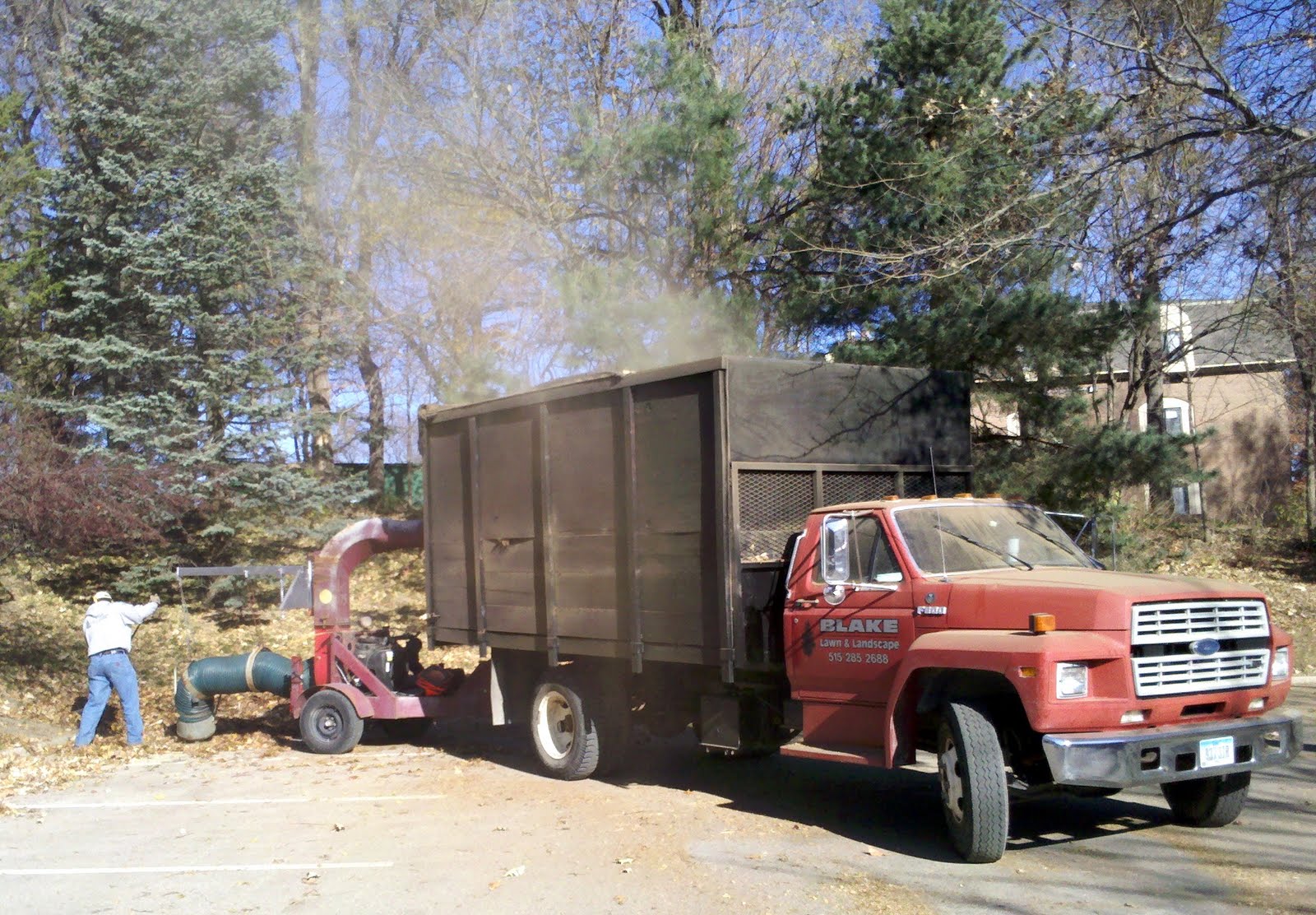
Wonder what happens when it snows? Flamethrowers & napalm?
Thursday, November 11, 2010
Intellectual Assent or Emotional Trust?
In my last few terms in Seminary, I have had multiple opportunities to mull over the "call" of God on our lives, what it entails, what it implies, what it demands, if anything. As my hermeneutics professor made clear, we come to the interpretation of Scripture with a measure of both personal subjectivity and cultural bias. I've begun to recognize at least some of this in myself.
It seems to me that we are in the midst of a cultural shift, as powerful as the one that led humanity from Mediaeval times into the Enlightenment. Except this shift is leading us OUT of the Enlightenment (or Modernism) into post-Modernism. And right now, the shift straddles the generations currently living on this planet (or, should I say, in the West).
I think the Baby Boomers are the last of the Moderns, the generation during which Modernism finally crumbled. Generation Y is the first generation of true post-Moderns, leaving Generation X as the transition generation, belonging to neither Modernism or post-Modernism - a generation filled with both angst and ambivalence. As the Brits would say: poor sods!
Here is what I see as the key differences in these world-views:
The Modern Western emphasis is on rational belief in objective truth (usu. with scientific or mathematical proof)
The post-Modern emphasis despairs of objective truth, admits to none but subjective (individual) truth, and will trust only in clearly demonstrated and evident character
Each of these are different yet again from the Mediaeval (and prior) pre-Modern emphasis on faithfulness to duty and to the essential nature of a given relationship (esp. master/servant, governor/governed)
When it comes to religious belief, pre-Modernism was defined by duty to the Creator and to the Creator's given order of things. It was simpler and more clearly defined: there were the obedient... and the disobedient. The standard was clear, and humankind was measured against the standard.
Modernism in religion led to either rational adherence to humanism (humankind became the standard - man as the measure of all things), or to a non-rational unquestioned belief in fundamental doctrines about God which are essentially unprovable, but necessary to sustain against creeping scientific Modernism.
Post-modernism, when applied to religion, is divided between disbelief in objective, universal truth, and a longing for some solid footing on which we can stand to deal with moral questions (hence the looking back to ancient traditions which is becoming more and more common).
So as Christ-followers today attempt to articulate the truth of the Gospel to the post-Modern generations coming up, we must abandon the methods that spoke to Moderns: apologetics, a defense of the historical Biblical record as proven to be reliable by archaeology, critical analysis, etc.
Instead, we should focus on those things that connect with post-Moderns: community, living your beliefs and commitments, character demonstrated in actions - something in which to place trust at a personal, emotional, experiential level, not take a mainly intellectual and scientific approach.
The Modernist focus on rational belief definitely influenced the evangelism techniques of the last several generations. The emphasis has been on intellectual assent rather than on emotional trust. Take, for example, this oft-quoted verse, John 3:16:
"For God so loved the world that He gave His only begotten Son, that whoever believes in Him should not perish but have everlasting life."
The word for "believe" in John 3 can also be translated as commit, trust, be faithful to. The feel of the verse is much different if the key phrase is rendered "whoever commits to Him", or "whoever trusts Him", or "whoever is faithful to Him". We are no longer talking about intellectual assent, about rational belief in objective truth. We're talking about emotional reliance on proven character, about committment to a trustworthy and Holy person.
The Evangelical church we're now attending has this little summary on it's weekly bulletin cover:
Believe
Accept
Switch
Express
It starts with intellectual assent, which leads to life change. Hmpf. Well, at least it's an improvement from the way Evangelical churches have often expected newcomers to assimilate into the church:
Behave
Believe
Belong
First, clean up your act, then sign this statement of belief, and then.. you can join. Yuk. Better to reverse the process:
Belong
Believe
Behave
In other words, come join us, hang out, catch the vision. When you see that it's for you, commit yourself to follow. The life change stuff will happen as a matter of course.
A better metaphor for "conversion" might be the process of apprenticeship. When a person is considering taking up a trade, there are several stages to it. You have to move progressively from neophyte to journeyman. First, you hear about it, then you check it out, then you sign up, then you show up, then you watch & learn, then you practice what you learned. The same stages could apply to becoming an apprentice to Christ:
Hear/Observe/Consider
Seek/Inquire/Discover
Identify/Accept/Sign on
Participate/Belong/Connect
Follow/Submit/Commit
Learn/Imitate/Practice
And somewhere in there, you trust. Trust the process, the teacher, the experience, the group, the Master Craftsman. And that trust, that emotional commitment, is the stuff of conversion to a new life.
It seems to me that we are in the midst of a cultural shift, as powerful as the one that led humanity from Mediaeval times into the Enlightenment. Except this shift is leading us OUT of the Enlightenment (or Modernism) into post-Modernism. And right now, the shift straddles the generations currently living on this planet (or, should I say, in the West).
I think the Baby Boomers are the last of the Moderns, the generation during which Modernism finally crumbled. Generation Y is the first generation of true post-Moderns, leaving Generation X as the transition generation, belonging to neither Modernism or post-Modernism - a generation filled with both angst and ambivalence. As the Brits would say: poor sods!
Here is what I see as the key differences in these world-views:
The Modern Western emphasis is on rational belief in objective truth (usu. with scientific or mathematical proof)
The post-Modern emphasis despairs of objective truth, admits to none but subjective (individual) truth, and will trust only in clearly demonstrated and evident character
Each of these are different yet again from the Mediaeval (and prior) pre-Modern emphasis on faithfulness to duty and to the essential nature of a given relationship (esp. master/servant, governor/governed)
When it comes to religious belief, pre-Modernism was defined by duty to the Creator and to the Creator's given order of things. It was simpler and more clearly defined: there were the obedient... and the disobedient. The standard was clear, and humankind was measured against the standard.
Modernism in religion led to either rational adherence to humanism (humankind became the standard - man as the measure of all things), or to a non-rational unquestioned belief in fundamental doctrines about God which are essentially unprovable, but necessary to sustain against creeping scientific Modernism.
Post-modernism, when applied to religion, is divided between disbelief in objective, universal truth, and a longing for some solid footing on which we can stand to deal with moral questions (hence the looking back to ancient traditions which is becoming more and more common).
So as Christ-followers today attempt to articulate the truth of the Gospel to the post-Modern generations coming up, we must abandon the methods that spoke to Moderns: apologetics, a defense of the historical Biblical record as proven to be reliable by archaeology, critical analysis, etc.
Instead, we should focus on those things that connect with post-Moderns: community, living your beliefs and commitments, character demonstrated in actions - something in which to place trust at a personal, emotional, experiential level, not take a mainly intellectual and scientific approach.
The Modernist focus on rational belief definitely influenced the evangelism techniques of the last several generations. The emphasis has been on intellectual assent rather than on emotional trust. Take, for example, this oft-quoted verse, John 3:16:
"For God so loved the world that He gave His only begotten Son, that whoever believes in Him should not perish but have everlasting life."
The word for "believe" in John 3 can also be translated as commit, trust, be faithful to. The feel of the verse is much different if the key phrase is rendered "whoever commits to Him", or "whoever trusts Him", or "whoever is faithful to Him". We are no longer talking about intellectual assent, about rational belief in objective truth. We're talking about emotional reliance on proven character, about committment to a trustworthy and Holy person.
The Evangelical church we're now attending has this little summary on it's weekly bulletin cover:
Believe
Accept
Switch
Express
It starts with intellectual assent, which leads to life change. Hmpf. Well, at least it's an improvement from the way Evangelical churches have often expected newcomers to assimilate into the church:
Behave
Believe
Belong
First, clean up your act, then sign this statement of belief, and then.. you can join. Yuk. Better to reverse the process:
Belong
Believe
Behave
In other words, come join us, hang out, catch the vision. When you see that it's for you, commit yourself to follow. The life change stuff will happen as a matter of course.
A better metaphor for "conversion" might be the process of apprenticeship. When a person is considering taking up a trade, there are several stages to it. You have to move progressively from neophyte to journeyman. First, you hear about it, then you check it out, then you sign up, then you show up, then you watch & learn, then you practice what you learned. The same stages could apply to becoming an apprentice to Christ:
Hear/Observe/Consider
Seek/Inquire/Discover
Identify/Accept/Sign on
Participate/Belong/Connect
Follow/Submit/Commit
Learn/Imitate/Practice
And somewhere in there, you trust. Trust the process, the teacher, the experience, the group, the Master Craftsman. And that trust, that emotional commitment, is the stuff of conversion to a new life.
Monday, November 08, 2010
Virtual friend group
Here are excerpts from an L.A. Times story that describes what friendship has come to mean in the age of Facebook. No comment needed, really. The guy makes his point all by himself.
By Neal Gabler, Special to the Los Angeles Times
October 17, 2010
With the new television season upon us, here are a few things you are virtually certain to see again and again and again: lots of folks spending the better part of their day surrounded by their friends and family in happy conviviality; folks wandering into the unlocked apartments and homes of friends, family and neighbors at any time of the day or night as if this were the most natural thing in the world; friends and family sitting down and having lots of tearful heart-to-hearts; Little League games, school assemblies and dance recitals, all attended by, you guessed it, scads of friends and family.
You're going to be seeing these scenes repeatedly because the basic unit of television is not the lone individual or the partnership or even the nuclear family. The basic unit of television is the flock — be it the extended family of brothers and sisters, grandfathers and grandmothers, nieces, nephews and cousins, or the extended circle of friends, and, rest assured, it is always a circle. On television friends never come in pairs; they invariably congregate in groups of three or more.
What makes this so remarkable is that it has been happening at a time when it is increasingly difficult to find this kind of deep social interaction anyplace but on TV. Nearly a decade ago, Harvard professor Robert Putnam observed in his classic "Bowling Alone" that Americans had become more and more disconnected from one another and from their society. As Putnam put it, "For the first two-thirds of the twentieth century a powerful tide bore Americans into ever deeper engagement in the life of their communities, but a few decades ago — silently, without warning — that tide reversed and we were overtaken by a treacherous current." It was a current that pulled Americans apart.
Moreover, the current that Putnam observed has, according to more recent studies, only intensified in the last decade. One study found that Americans had one-third fewer nonfamily confidants than they had 20 years earlier, and 25% had no one in whom to confide whatsoever. Another study of 3,000 Americans found that on average they had only four close social contacts, but these included family members like one's own spouse.
This decline in real friendships may account in part for the dramatic rise of virtual friendships like those on social-networking sites where being "friended" is less a sign of personal engagement than a quantitative measure of how many people your life has brushed and how many names you can collect, but this is friendship lite. Facebook, in fact, only underscores how much traditional friendship — friendship in which you meet, talk and share — has become an anachronism and how much being "friended" is an ironic term.
In Putnam's view, based on several studies, "TV is apparently especially attractive for people who feel unhappy, particularly when there is nothing else to do."
It's not that we prefer television to human contact. The laugh track attests that most people don't really want to be alone in front of their TV sets. They want to be part of a larger community. Yet another study indicates that TV provides a sort of simulacrum of community because the relationship between the TV viewer and the people he or she watches on the screen competes with and even substitutes for physical encounters with real people. It is Facebook with hundreds of "friends" but without any actual contact with any of them, only the virtual contact of watching.
But what none of these theories of television has noticed is that TV has learned how to compensate for the increasing alienation it seems to induce. And it compensates not by letting us kill time with "friends" on screen but by providing us with those nonstop fantasies of friendship, which clearly give us a vicarious pleasure. Watch "Seinfeld" or "Friends" or "Sex and the City" or "Community" or "Men of a Certain Age" — the list is endless — and you'll see people who not only are never ever alone but people whose relationships are basically smooth, painless, uninhibited and deeply, deeply intimate — the kind of friendships we may have had in college but that most of us can only dream about now. How many adults do you know who manage to hang out with their friends every single day for hour after hour?
Or watch the incomparable "Modern Family" or "Brothers and Sisters" or "Parenthood" and you'll see big, happy family gatherings with lots of bonhomie and jokes and an outpouring of love. On the last there seems to be a huge extended family dinner every other night where most families would be lucky to have one such get-together each year at Thanksgiving. And don't forget those school assemblies, already mentioned, which everyone in the family takes off work to attend en masse or the weekend birthday parties where attendance is also compulsory.
One feels a little churlish pointing out how phony most of this intimacy is. After all, these shows, even one as observant as "Modern Family," aren't about realism. They aren't about the genuine emotional underpinnings of friendship or family, and they certainly aren't about the rough course that almost every relationship, be it with a friend or family member, takes — the inevitable squabbles, the sometimes long and even permanent ruptures, the obtuseness, the selfishness, the reprioritization, the expectations of reciprocity, the drifting apart, the agonizing sense of loneliness even within the flock. These shows are pure wish fulfillment. They offer us friends and family at one's beck and call but without any of the hassles. It is friendship as we want it to be.
For the fact is that we miss the friendships we no longer have, and we know that Facebook or e-mails cannot possibly compensate for the loss. So we sit in front of our television sets and enjoy the dream of friendship instead: a dream where we need never be alone, where there are a group of people who would do anything for us, and where everyone seems to understand us to our very core, just like Jerry and George, Chandler and Joey, Carrie and her girls, or the members of the McKinley High glee club. It is a powerful dream, and it is one that may now be the primary pleasure of television.
By Neal Gabler, Special to the Los Angeles Times
October 17, 2010
With the new television season upon us, here are a few things you are virtually certain to see again and again and again: lots of folks spending the better part of their day surrounded by their friends and family in happy conviviality; folks wandering into the unlocked apartments and homes of friends, family and neighbors at any time of the day or night as if this were the most natural thing in the world; friends and family sitting down and having lots of tearful heart-to-hearts; Little League games, school assemblies and dance recitals, all attended by, you guessed it, scads of friends and family.
You're going to be seeing these scenes repeatedly because the basic unit of television is not the lone individual or the partnership or even the nuclear family. The basic unit of television is the flock — be it the extended family of brothers and sisters, grandfathers and grandmothers, nieces, nephews and cousins, or the extended circle of friends, and, rest assured, it is always a circle. On television friends never come in pairs; they invariably congregate in groups of three or more.
What makes this so remarkable is that it has been happening at a time when it is increasingly difficult to find this kind of deep social interaction anyplace but on TV. Nearly a decade ago, Harvard professor Robert Putnam observed in his classic "Bowling Alone" that Americans had become more and more disconnected from one another and from their society. As Putnam put it, "For the first two-thirds of the twentieth century a powerful tide bore Americans into ever deeper engagement in the life of their communities, but a few decades ago — silently, without warning — that tide reversed and we were overtaken by a treacherous current." It was a current that pulled Americans apart.
Moreover, the current that Putnam observed has, according to more recent studies, only intensified in the last decade. One study found that Americans had one-third fewer nonfamily confidants than they had 20 years earlier, and 25% had no one in whom to confide whatsoever. Another study of 3,000 Americans found that on average they had only four close social contacts, but these included family members like one's own spouse.
This decline in real friendships may account in part for the dramatic rise of virtual friendships like those on social-networking sites where being "friended" is less a sign of personal engagement than a quantitative measure of how many people your life has brushed and how many names you can collect, but this is friendship lite. Facebook, in fact, only underscores how much traditional friendship — friendship in which you meet, talk and share — has become an anachronism and how much being "friended" is an ironic term.
In Putnam's view, based on several studies, "TV is apparently especially attractive for people who feel unhappy, particularly when there is nothing else to do."
It's not that we prefer television to human contact. The laugh track attests that most people don't really want to be alone in front of their TV sets. They want to be part of a larger community. Yet another study indicates that TV provides a sort of simulacrum of community because the relationship between the TV viewer and the people he or she watches on the screen competes with and even substitutes for physical encounters with real people. It is Facebook with hundreds of "friends" but without any actual contact with any of them, only the virtual contact of watching.
But what none of these theories of television has noticed is that TV has learned how to compensate for the increasing alienation it seems to induce. And it compensates not by letting us kill time with "friends" on screen but by providing us with those nonstop fantasies of friendship, which clearly give us a vicarious pleasure. Watch "Seinfeld" or "Friends" or "Sex and the City" or "Community" or "Men of a Certain Age" — the list is endless — and you'll see people who not only are never ever alone but people whose relationships are basically smooth, painless, uninhibited and deeply, deeply intimate — the kind of friendships we may have had in college but that most of us can only dream about now. How many adults do you know who manage to hang out with their friends every single day for hour after hour?
Or watch the incomparable "Modern Family" or "Brothers and Sisters" or "Parenthood" and you'll see big, happy family gatherings with lots of bonhomie and jokes and an outpouring of love. On the last there seems to be a huge extended family dinner every other night where most families would be lucky to have one such get-together each year at Thanksgiving. And don't forget those school assemblies, already mentioned, which everyone in the family takes off work to attend en masse or the weekend birthday parties where attendance is also compulsory.
One feels a little churlish pointing out how phony most of this intimacy is. After all, these shows, even one as observant as "Modern Family," aren't about realism. They aren't about the genuine emotional underpinnings of friendship or family, and they certainly aren't about the rough course that almost every relationship, be it with a friend or family member, takes — the inevitable squabbles, the sometimes long and even permanent ruptures, the obtuseness, the selfishness, the reprioritization, the expectations of reciprocity, the drifting apart, the agonizing sense of loneliness even within the flock. These shows are pure wish fulfillment. They offer us friends and family at one's beck and call but without any of the hassles. It is friendship as we want it to be.
For the fact is that we miss the friendships we no longer have, and we know that Facebook or e-mails cannot possibly compensate for the loss. So we sit in front of our television sets and enjoy the dream of friendship instead: a dream where we need never be alone, where there are a group of people who would do anything for us, and where everyone seems to understand us to our very core, just like Jerry and George, Chandler and Joey, Carrie and her girls, or the members of the McKinley High glee club. It is a powerful dream, and it is one that may now be the primary pleasure of television.
Friday, November 05, 2010
Autumn Leaves
The falling leaves
Drift by my window
The falling leaves
Of red and gold
Birthdays are a time for reflection, right? So here you go.
When one is my age, and the season of Autumn rolls around, one can begin to take the colorful messages of Fall a little personally. I mean, all around you there is sap drying up, leaves getting brittle, bursts of color preceeding the drop off, younger restless creatures rustling through the detritus of dying vegetation… jeepers, I get your point already! I can hardly wait for winter to set in metaphorically. :( I'll probably be downright offended at the themes January and February relate to me when I'm, oh... 72 or so!
A noontime stroll around the company grounds earlier in the week got me thinking about the different approaches trees have to the progress of the seasons, especially this Autumn one. First, there's the "let's get it all over with" approach.

There's the "quite bright, but losing it in stages" approach.


There's the "evergreen (I refuse to change at all)" approach.

Each has their merits, I suppose, but.. I don't know. I kind of favor this one: "Stand in full leaf for a long time, turning color slowly, easing into a pleasing blend of youth and age. Drop the last leaf just before Spring comes around."

:) Yeah. That's my aim. Kind of like the verse D gave me for my birthday, Psalm 92:12-14:
"The righteous shall flourish like a palm tree,
[...] They shall still bear fruit in old age;
They shall be fresh and flourishing"
Think I'll go get myself a Bonsai tree. While I still have time to teach it a little something. ;)
Tuesday, November 02, 2010
Voting as Social Liturgy
Liturgy: it's not just for church services anymore.
And I suppose you could say it never was. The handy little website etymonline.com tells me that it was originally a Greek concept centered on the idea of public service:
Only during the middle ages was it co-opted to refer specifically to Christian religious ritual. So since we have thought of it in those terms for 500+ years, it's needful to distinguish between religious and secular liturgy. And with today being voting day in America... what better day to talk about the social (public) use of liturgy?
Social liturgies come in many forms in this country. They can be as customized and intimate as birthday rituals (lighting & blowing out candles, having a red plate at dinner, being sung to), or as uniform and distant as saying the pledge of allegiance, or rising & facing the flag for the national anthem. They can be community-based, like the annual block party or the parish festival. They can be national in scope, and many are.
Some common, widely shared ones that come to mind are: 4th of July parades and fireworks, Memorial Day & Labor Day cookouts and events, blowing horns and sharing kisses at midnight on NYE, eating Thanksgiving dinner with family & friends. These are (mostly) secular versions of the kind of rituals performed on religious holidays like Yom Kippur, Christmas Eve, Ramadan, etc. We do roughly the same things as everyone else does (with some local variation), and do them at pretty much the same time, all over the country.
That is what Election Day is. It's a Mass for the body politic, a social liturgy. On this day we exercise our sacred (in a public sense) duty to cast our vote, freely and without coercion, in the privacy of an enclosed but portable booth, in a public location that all our neighbors share, aided by temple ministers & acolytes (poll workers). It's independent and communal, it's public and private, it's personal and national, all at once. And we all do it. On the same day.
Or... we should.
One of the things that concerns me about the relatively new practice of early voting is that it detracts from the communal nature of our shared voting liturgy. When you vote early, it's like you're receiving the Eucharist in private, or going bowling alone, or sticking a candle in a cupcake and singing Happy Birthday to yourself. What you're missing is not the ritual, but… everyone else!
Sure you participate, but - on your own time and in your own way, apart from the community norms. You're going to church on the internet. You're eating turkey, green bean casserole and pumpkin pie by yourself at Boston Market. You're wishing yourself Happy New Year, and kissing the mirror at midnight… it's just not the same.
So I've chosen to pass by the "early voting" table at the library the past few weeks. Today, I join my neighbors and fellow citizens of precinct 2 at City Hall just down the street from the HyVee grocery to exercise our civic duty together. We won't hold hands and sing Kumbayah, but I might say hi to someone, and smile - even as they cancel out my vote with their own. ;)
(although it might be pretty hard for them to do that, since I'm likely not opting for major party candidates this year - bunch 'a scoundrels!)
And I suppose you could say it never was. The handy little website etymonline.com tells me that it was originally a Greek concept centered on the idea of public service:
from L.L. liturgia "public service, public worship," from Gk. leitourgia, from leitourgos "one who performs a public ceremony or service, public servant," from leito- "public" + -ergos "that works,"
Only during the middle ages was it co-opted to refer specifically to Christian religious ritual. So since we have thought of it in those terms for 500+ years, it's needful to distinguish between religious and secular liturgy. And with today being voting day in America... what better day to talk about the social (public) use of liturgy?
Social liturgies come in many forms in this country. They can be as customized and intimate as birthday rituals (lighting & blowing out candles, having a red plate at dinner, being sung to), or as uniform and distant as saying the pledge of allegiance, or rising & facing the flag for the national anthem. They can be community-based, like the annual block party or the parish festival. They can be national in scope, and many are.
Some common, widely shared ones that come to mind are: 4th of July parades and fireworks, Memorial Day & Labor Day cookouts and events, blowing horns and sharing kisses at midnight on NYE, eating Thanksgiving dinner with family & friends. These are (mostly) secular versions of the kind of rituals performed on religious holidays like Yom Kippur, Christmas Eve, Ramadan, etc. We do roughly the same things as everyone else does (with some local variation), and do them at pretty much the same time, all over the country.
That is what Election Day is. It's a Mass for the body politic, a social liturgy. On this day we exercise our sacred (in a public sense) duty to cast our vote, freely and without coercion, in the privacy of an enclosed but portable booth, in a public location that all our neighbors share, aided by temple ministers & acolytes (poll workers). It's independent and communal, it's public and private, it's personal and national, all at once. And we all do it. On the same day.
Or... we should.
One of the things that concerns me about the relatively new practice of early voting is that it detracts from the communal nature of our shared voting liturgy. When you vote early, it's like you're receiving the Eucharist in private, or going bowling alone, or sticking a candle in a cupcake and singing Happy Birthday to yourself. What you're missing is not the ritual, but… everyone else!
Sure you participate, but - on your own time and in your own way, apart from the community norms. You're going to church on the internet. You're eating turkey, green bean casserole and pumpkin pie by yourself at Boston Market. You're wishing yourself Happy New Year, and kissing the mirror at midnight… it's just not the same.
So I've chosen to pass by the "early voting" table at the library the past few weeks. Today, I join my neighbors and fellow citizens of precinct 2 at City Hall just down the street from the HyVee grocery to exercise our civic duty together. We won't hold hands and sing Kumbayah, but I might say hi to someone, and smile - even as they cancel out my vote with their own. ;)
(although it might be pretty hard for them to do that, since I'm likely not opting for major party candidates this year - bunch 'a scoundrels!)
Sunday, October 31, 2010
Lakeside Retreat

What a pretty place to spend an extended weekend. :)
A week ago, this was the site of my annual personal retreat (a long weekend spent in contemplation, self-examination and looking forward). It also happened to work out to line up with a semi-annual doctor visit, so it was a multi-purpose weekend - all good purposes!

The grounds were lovely, with a good amount of leaf color left.

And, on Friday at least, it wasn't raining. The rest of the time ... :( Accommodations were simple, but sufficient - a remodeled farmhouse (and I use the word remodeled loosely).

But I don't think the Jesuits have ever been long on luxury, have they?

The retreats at this place are all silent, so I didn't say a word to anyone there until I actually paid my bill on Monday, and it seemed fitting to stroll the grounds and hear nothing but leaves rustling, taking in the views.


That, plus some very positive time in Milwaukee, seeing the doctor as well as some comfortingly familiar surroundings, made for a great weekend! Sort of felt like birthday came a week early. Think I might try to do something like it again next year, circumstances permitting. :)
Now, on to more birthday celebrating!
Friday, October 29, 2010
Hard-hearted Pharaoh?
Our latest assignment in the Pentateuch class is to relate the seemingly conflicting statements in Exodus about God "hardening Pharaoh's heart" so that he would not let Israel go, and those statements that say "Pharaoh hardened his heart", indicating that Pharaoh was responsible for resisting and not God. This is a real trouble spot, for me and many others. This response is yet another indication of the influence of Seminary on my perspectives. Calvinist no more, I guess...
***********
If one is a good Calvinist, one would say "what God permits.. God also ordains." This is because God is seen in this system as having perfect exhaustive foreknowledge (He is never surprised), and exercises complete sovereignty (His will is never thwarted). A good Calvinist would be perfectly comfortable with the notion that God deliberately hardened Pharaoh's heart in order to force him into a position where God could then punish the Egyptians for their 400-year abuse of Israel. It was God's will for Pharaoh to resist. He couldn't help himself.
And if someone objects to God's punishment of Egypt on the grounds that Pharaoh could not resist God's will (any more than we can, for example, resist God's saving grace if He elects us), and so should not be held guilty, we can then hear Saint Paul's sharp rebuke ringing out: "Who are you, O man, to talk back to God?" (Rom 9:20) In other words, such impertinence! How dare you question God? You are nothing but a lump of clay on the wheel for God to make for whatever purpose He pleases, even to smash into powder and re-form.
Well..
If one were not a Calvinist, but rather an Open Theist, one might suggest that God does not have perfect foreknowledge, but rather is open toward the future. God is omniscient, yes, but His omniscience only extends to what actually exists, and the future does not yet exist. Only possibilities do. Only likelihoods do. God knows the inclination of our hearts, knows our temperaments, and knows those perfectly. He is exceptionally good at anticipating what we will do, since He knows us better than we know ourselves. And in this present case, He knew Pharaoh's heart inclinations and his temperament - perfectly. God knew the hardness in Pharaoh's heart, his stubborn pride, and He let it emerge.
Perhaps God even goaded Pharaoh into exercising that native pridefulness by the way God set up the confrontation, and the back-and-forth exchanges with Moses, the trading of threats and escalating plagues. Maybe God used Pharaoh's stubbornness to His own advantage, in the same way that one can goad a "macho" guy into fighting by publicly questioning his manhood. You use his insecurities against him, to get him to do what you want him to: land that first punch, so you can then proceed to lay him out on his back legitimately.
Regardless of whether God "hardened" Pharaoh's heart against his will, or whether God moved a naturally hard-hearted Pharaoh to the course of action He wanted by skillfully goading him, what matters is that God eventually gets what He aims at, whether we stand in His way, or cooperate with Him. God indeed is not thwarted in His overall purposes by our disobedience. But we can certainly suffer by opposing His will, and avoid hardship by cooperating with God. The inclination of our hearts makes all the difference, and God knows exactly what those inclinations are.
***********
If one is a good Calvinist, one would say "what God permits.. God also ordains." This is because God is seen in this system as having perfect exhaustive foreknowledge (He is never surprised), and exercises complete sovereignty (His will is never thwarted). A good Calvinist would be perfectly comfortable with the notion that God deliberately hardened Pharaoh's heart in order to force him into a position where God could then punish the Egyptians for their 400-year abuse of Israel. It was God's will for Pharaoh to resist. He couldn't help himself.
And if someone objects to God's punishment of Egypt on the grounds that Pharaoh could not resist God's will (any more than we can, for example, resist God's saving grace if He elects us), and so should not be held guilty, we can then hear Saint Paul's sharp rebuke ringing out: "Who are you, O man, to talk back to God?" (Rom 9:20) In other words, such impertinence! How dare you question God? You are nothing but a lump of clay on the wheel for God to make for whatever purpose He pleases, even to smash into powder and re-form.
Well..
If one were not a Calvinist, but rather an Open Theist, one might suggest that God does not have perfect foreknowledge, but rather is open toward the future. God is omniscient, yes, but His omniscience only extends to what actually exists, and the future does not yet exist. Only possibilities do. Only likelihoods do. God knows the inclination of our hearts, knows our temperaments, and knows those perfectly. He is exceptionally good at anticipating what we will do, since He knows us better than we know ourselves. And in this present case, He knew Pharaoh's heart inclinations and his temperament - perfectly. God knew the hardness in Pharaoh's heart, his stubborn pride, and He let it emerge.
Perhaps God even goaded Pharaoh into exercising that native pridefulness by the way God set up the confrontation, and the back-and-forth exchanges with Moses, the trading of threats and escalating plagues. Maybe God used Pharaoh's stubbornness to His own advantage, in the same way that one can goad a "macho" guy into fighting by publicly questioning his manhood. You use his insecurities against him, to get him to do what you want him to: land that first punch, so you can then proceed to lay him out on his back legitimately.
Regardless of whether God "hardened" Pharaoh's heart against his will, or whether God moved a naturally hard-hearted Pharaoh to the course of action He wanted by skillfully goading him, what matters is that God eventually gets what He aims at, whether we stand in His way, or cooperate with Him. God indeed is not thwarted in His overall purposes by our disobedience. But we can certainly suffer by opposing His will, and avoid hardship by cooperating with God. The inclination of our hearts makes all the difference, and God knows exactly what those inclinations are.
Wednesday, October 27, 2010
The Weepies
 Well, it's been some time since I've reported back on a concert! I've learned that not much comes through here, compared to my prior community.
 There, I could've gone to a show twice a week and not repeated any band all year long. Here... I find that I can really plan ahead. ;)

A new venue, in a new community, about a two hour drive away, but oh, so worth it to see a band I've been following ever since that JCPenney Christmas commercial where they sang "All That I Want".

The lobby was crowded, waiting for the doors to open, but the theatre was probably only 2/3 full by the time the headliners took the stage. It was a Tuesday night, after all, in a relatively small (albeit a college) town in the middle of ... cornfields. You can understand low attendance, on - you know - a school night. ;)

The crowd was pretty mixed. Not many teens, but lots of college-age and a bunch of older types, too. It's kind of ageless music, I guess, with broad appeal. They had the stage set with luminaries and candles, which was cool. And as often happens with me, I liked the opening act a lot: Matt the Electrician.

He was a folk/pop singer/songwriter with a great sense of humor and nicely spun stories. I picked up his latest "Animal Boy" as an advance birthday gift for self, to be opened on the day.

The Weepies themselves were on tour to promote their latest (and 4th) CD, "Be My Thrill", which is full of the same combination of light pop feel, deep lyrics, and gentle two-part harmonies, definitely in the indie style of chording (no Everly Brothers major thirds here).
There are great turns of phrases in some of their songs, like this one about a guy who is trying to deal with missing a girl, and doesn't want morning to come:
"Sun's coming up slow, like he's thinking it over; the moon throws a dirty look over his shoulder."

I had tweeted them earlier in the evening, requesting that they play "Painting By Chagall", which.. they did! Aww.. I always get sentimental when I hear that one. Yes, alright, I get sentimental about a lot of stuff, but.. some things more than others. :)
Friday, October 22, 2010
Getting ready for a scolding - updated
Post-doctor visit report: No scolding, gained only 1 pound, but all other readings improved. Nothing out of range. :) Yay! One healthy specimen, this guy...
*********
By the time this posts (love this advance posting date feature..), I'll be 400 miles from home and sitting in the Dr.'s office waiting to get yelled at. :(
Well, maybe. We'll see I guess. My weight is probably up from last time, and she snapped at me about it then. Grrr...
But since this time I had the blood work done at a lab near home, they allowed me to see the blood test results right away via fax, and... they don't look so bad! Cholesterol's okay (both kinds), triglycerides are fine, blood glucose right at the range's edge. Thyroid hormone is alright, testosterone acceptable, minerals all good, PSA fine. The only real problem area is hemoglobin, but that's been consistently high for as long as I've been tested.
All I'm really concerned about is poundage. If she judges with the scale and not her eyes... I'm done for. :) Hmm... maybe if I wear a muscle shirt...
Umm, no.
Regardless, this office visit is followed by three days of retreat time on the shores of Lake Winnebago, to do my annual exercise of taking stock of myself. Plus whatever else my heart, feet and hands find to do that's pleasant. No doubt I'll think of something. :)
*********
By the time this posts (love this advance posting date feature..), I'll be 400 miles from home and sitting in the Dr.'s office waiting to get yelled at. :(
Well, maybe. We'll see I guess. My weight is probably up from last time, and she snapped at me about it then. Grrr...
But since this time I had the blood work done at a lab near home, they allowed me to see the blood test results right away via fax, and... they don't look so bad! Cholesterol's okay (both kinds), triglycerides are fine, blood glucose right at the range's edge. Thyroid hormone is alright, testosterone acceptable, minerals all good, PSA fine. The only real problem area is hemoglobin, but that's been consistently high for as long as I've been tested.
All I'm really concerned about is poundage. If she judges with the scale and not her eyes... I'm done for. :) Hmm... maybe if I wear a muscle shirt...
Umm, no.
Regardless, this office visit is followed by three days of retreat time on the shores of Lake Winnebago, to do my annual exercise of taking stock of myself. Plus whatever else my heart, feet and hands find to do that's pleasant. No doubt I'll think of something. :)
Wednesday, October 20, 2010
Reflections on Genesis
I'm hustling right now to get ahead in my class assignments, so that when I take my annual retreat weekend in a few days I don't have to think about writing papers or posting on the discussion boards. I want to have a clear schedule so that I can be serendipitous! So I'm grinding them out right and left. The following is an assignment from the Pentateuch class where we were asked to post reflections on our time in Genesis. Hm. I doubt very much if I would have written these lines a half-dozen years ago. My perspectives have changed some.
***************
Reflections on Genesis
1) the role of the Bible in the Christian faith seems to be primarily about revealing God's character (not necessarily details about His essence or basic nature), His purposes in the world (particularly the redemptive purposes), essential aspects of human nature, and relationships in the created order. To use the Bible properly in the church today as Scripture requires that we respect its core purposes, and not overlay it with a Western Enlightenment scientific mindset. Modernity's penchant to require truth be at a granular level, rather than at the level of meta-narrative, is not consistent with the vast pespective of human history.
2) it seems to me that God does indeed do justice (good rewarded, evil punished, oppressed lifted, haughty made low, etc.)... but over time. Over generations and centuries, even. God is under no obligation to do justice on our timeframe, or even within the span of a human life. His reactions to us are not necessarily immediate - He doesn't close the feedback loop with the speed we would like. It's kind of like submitting several papers in a class and hearing nothing from the prof by way of evaluation until after the entire class is over and nothing can be changed. Sometimes the prof doesn't even answer your direct questions but instead offers vague generalities! You just have to go by what the prof told you in the beginning, your own instincts, and the advice of others who've taken that class (if they're still around!)
3) related to #2 above, I don't see individual (note that word) human beings as essential to the fulfillment of God's purposes. Humanity in general, yes. Individuals, no. God has many resources at His command, including many humans. He can work out His will without my or your cooperation. Individual cooperation with God is much more important for OUR well-being than for God's. :) His well-being is not dependent on us. However, ours is dependent on Him. The same can be said of His will and its outworking.
4) not all strife in the Bible is used by God to accomplish His will. This is not to say that God cannot use strife to further His ends, because He does (witness the selling of Joseph into slavery). But that is a far cry from saying that God always allows strife to happen because it is necessary to the outworking of His will. Here we can look at the strife between Hagar and Sarah. If those women had made serious effort to preserve harmony in Abraham's home, and had put their own selfish agendas aside, God could still have had the promise descend to future generations through Isaac. He could have made it crystal clear to all parties that Isaac was elected to carry the promise, without forcing Ishmael to separate from the family. There was no real strife between the brothers, just between the mothers. It appears that God did not incite the strife; he allowed the sending away of Ishmael, and turned it into blessing, only AFTER the strife had occurred. The separation in Abraham's family was not ordained ahead of time.
5) I really find myself questioning God's purposes in consistently passing over the first-born in Genesis, and then making such a big deal of the importance of the first-born in Exodus and later (through the Law's requirements to redeem the firstborn, the firstfruits of the womb, as rightfully His, set apart to Him). It's almost as if God is saying "do as I say, not as I do". What is going on here? I don't get it. And it perturbs me a bit, really. It's one of the things I voice aloud to God at times and get kind of worked up about it. God cuts me some slack in these matters, I think, because He knows that I know that I know nothing, and don't even pretend to understand. But I do voice my opinion to Him. ;)
***************
Reflections on Genesis
1) the role of the Bible in the Christian faith seems to be primarily about revealing God's character (not necessarily details about His essence or basic nature), His purposes in the world (particularly the redemptive purposes), essential aspects of human nature, and relationships in the created order. To use the Bible properly in the church today as Scripture requires that we respect its core purposes, and not overlay it with a Western Enlightenment scientific mindset. Modernity's penchant to require truth be at a granular level, rather than at the level of meta-narrative, is not consistent with the vast pespective of human history.
2) it seems to me that God does indeed do justice (good rewarded, evil punished, oppressed lifted, haughty made low, etc.)... but over time. Over generations and centuries, even. God is under no obligation to do justice on our timeframe, or even within the span of a human life. His reactions to us are not necessarily immediate - He doesn't close the feedback loop with the speed we would like. It's kind of like submitting several papers in a class and hearing nothing from the prof by way of evaluation until after the entire class is over and nothing can be changed. Sometimes the prof doesn't even answer your direct questions but instead offers vague generalities! You just have to go by what the prof told you in the beginning, your own instincts, and the advice of others who've taken that class (if they're still around!)
3) related to #2 above, I don't see individual (note that word) human beings as essential to the fulfillment of God's purposes. Humanity in general, yes. Individuals, no. God has many resources at His command, including many humans. He can work out His will without my or your cooperation. Individual cooperation with God is much more important for OUR well-being than for God's. :) His well-being is not dependent on us. However, ours is dependent on Him. The same can be said of His will and its outworking.
4) not all strife in the Bible is used by God to accomplish His will. This is not to say that God cannot use strife to further His ends, because He does (witness the selling of Joseph into slavery). But that is a far cry from saying that God always allows strife to happen because it is necessary to the outworking of His will. Here we can look at the strife between Hagar and Sarah. If those women had made serious effort to preserve harmony in Abraham's home, and had put their own selfish agendas aside, God could still have had the promise descend to future generations through Isaac. He could have made it crystal clear to all parties that Isaac was elected to carry the promise, without forcing Ishmael to separate from the family. There was no real strife between the brothers, just between the mothers. It appears that God did not incite the strife; he allowed the sending away of Ishmael, and turned it into blessing, only AFTER the strife had occurred. The separation in Abraham's family was not ordained ahead of time.
5) I really find myself questioning God's purposes in consistently passing over the first-born in Genesis, and then making such a big deal of the importance of the first-born in Exodus and later (through the Law's requirements to redeem the firstborn, the firstfruits of the womb, as rightfully His, set apart to Him). It's almost as if God is saying "do as I say, not as I do". What is going on here? I don't get it. And it perturbs me a bit, really. It's one of the things I voice aloud to God at times and get kind of worked up about it. God cuts me some slack in these matters, I think, because He knows that I know that I know nothing, and don't even pretend to understand. But I do voice my opinion to Him. ;)
Sunday, October 17, 2010
Run 1K? Are you kidding me?
It's been a while since I've worn one of these:

Following that nasty case of plantar fasciitis, and then the pinched sacral nerve, I was laid up for roughly 10 months. Packed on a few pounds over that time. And in a few practice runs last month, I found that the layoff and weight gain took a toll on my endurance. So I didn't think I'd be running through one of these any time soon:

But then, this charity event came along, and at a race length I thought I MIGHT be able to handle. One kilometer. One.
Yeah, man, that's my kind of athletic event. If you can call it an athletic event at all. It was mostly a beer run followed by a party.

This was the start of the race:

And here's where it finished:

So basically you ran from one bar to another, and had free beer at both ends. :) Warmups consisted of 12 oz. arm curls, if you get me. It's kind of awkward to run with a half-full beer cup. Kinda forces you to slow down. Not that slowing down is a bad thing...
The scenery was at least nice, running (and I use that term loosely) past the baseball stadium with a nice view of downtown:

I thought about renting a bike from the public bike kiosk, and riding the whole kilometer, but ... that wouldn't have been sporting.


Following that nasty case of plantar fasciitis, and then the pinched sacral nerve, I was laid up for roughly 10 months. Packed on a few pounds over that time. And in a few practice runs last month, I found that the layoff and weight gain took a toll on my endurance. So I didn't think I'd be running through one of these any time soon:

But then, this charity event came along, and at a race length I thought I MIGHT be able to handle. One kilometer. One.
Yeah, man, that's my kind of athletic event. If you can call it an athletic event at all. It was mostly a beer run followed by a party.

This was the start of the race:

And here's where it finished:

So basically you ran from one bar to another, and had free beer at both ends. :) Warmups consisted of 12 oz. arm curls, if you get me. It's kind of awkward to run with a half-full beer cup. Kinda forces you to slow down. Not that slowing down is a bad thing...
The scenery was at least nice, running (and I use that term loosely) past the baseball stadium with a nice view of downtown:

I thought about renting a bike from the public bike kiosk, and riding the whole kilometer, but ... that wouldn't have been sporting.

Saturday, October 09, 2010
Theology and Coffee
Fall appears to be coming to my fair city. Either that or the local trees have a thing about getting their tips frosted.

And speaking of my fair city...

This is one of the fairest shots I've seen of it. Pretty.
Are speaking of pretty shots...
this one at the coffee shop yesterday is something you don't see every day. A Rolls? Oof. I hung around to see who's it was, but nobody showed up, and eventually I got tired of studying.

One can only dig into the intricacies of 1&2 Chronicles for so long. Coffee does help, but only so much.

So, I went for a walk in the surrounding mall-ish area, which was gearing up for Martini-fest 2010. $15 for a pass card that gets you 10 sample-sized martinis at 10 different night spots in this retail area.

Sounded like a good deal, but the martinis offered were all frou-frou sugary concoctions that hardly resemble a martini at all. No thanks; guess I'm a purist in that regard: half gin, half vodka, a little dirty, four olives. That'll do, bud.
But it was a swell day to walk around and change my scenery before diving back into more tales of Israel's Southern Kingdom (aka Judah). At least there they had a few good kings, not such a bunch of corrupt politicians and hoodlums like those Northerners...


And speaking of my fair city...

This is one of the fairest shots I've seen of it. Pretty.
Are speaking of pretty shots...
this one at the coffee shop yesterday is something you don't see every day. A Rolls? Oof. I hung around to see who's it was, but nobody showed up, and eventually I got tired of studying.

One can only dig into the intricacies of 1&2 Chronicles for so long. Coffee does help, but only so much.

So, I went for a walk in the surrounding mall-ish area, which was gearing up for Martini-fest 2010. $15 for a pass card that gets you 10 sample-sized martinis at 10 different night spots in this retail area.

Sounded like a good deal, but the martinis offered were all frou-frou sugary concoctions that hardly resemble a martini at all. No thanks; guess I'm a purist in that regard: half gin, half vodka, a little dirty, four olives. That'll do, bud.
But it was a swell day to walk around and change my scenery before diving back into more tales of Israel's Southern Kingdom (aka Judah). At least there they had a few good kings, not such a bunch of corrupt politicians and hoodlums like those Northerners...

Wednesday, October 06, 2010
Football & Fall
... made for each other.

We begin with a visit to the family cabin for sibling birthdays,

and continue the next day with a flyover at the stadium. :)

Patriotism and football on a crisp sunny day in Titletown, USA.

You know, it's all very Upper Midwest small town Americana...

shared with 70,000+ other people just like you. (Mostly.)

Yeah. Football in the Fall. There's nothing quite like it.


We begin with a visit to the family cabin for sibling birthdays,

and continue the next day with a flyover at the stadium. :)

Patriotism and football on a crisp sunny day in Titletown, USA.

You know, it's all very Upper Midwest small town Americana...

shared with 70,000+ other people just like you. (Mostly.)

Yeah. Football in the Fall. There's nothing quite like it.

Saturday, October 02, 2010
Human Nature in Gen. 1-11
Week 3 Post from OT 501
Q. How does Gen. 1-11 shape your conception of humanity and how does that conception relate to your culture's dominant construal of human nature?
A. The clear picture I get from Gen. 2 is that humankind is relational, social by nature. Even Gen. 3 says the same, but it also describes relationship when it's dysfunctional because of sin. Gen. 4 shows the "inhumanity" of Cain's punishment, via his pitiful reaction to forced isolation from others. Later on, Babel shows the social nature of humanity, and what it can become when self-exaltation and narcissism goes unchecked. There are many examples beyond these few. We are clearly made for healthy relationships, and are hurt by their lack, or their distortion.
Our predominant cultural model of rugged individualism, shaped by both the Enlightenment and the Frontier, argues directly against the inherent value of relationship and community. One of our culture's highest values is independence; we despise dependency. We seek autonomy, shun collectivism; we praise self-reilance, condemn an entitlement mentality. We put relationship and interdependence on the back burner, sacrificed to achievement and self-fulfillment.
We should be careful not to think that the existence of sin renders the case for relationality moot. Sure, we can hurt each other because of sin, and often do. But, we only hurt in our relationships because we are hungry for wholeness there, and painfully feel its absence. It proves the case, not disproves it. Personally, I am only now beginning to realize my own deficiency in this regard. I still value independence and autonomy higher than I do relationship and community, but less dramatically so than even 5 years ago. I can at least now argue the case for them in a balanced way.
Q. How does Gen. 1-11 shape your conception of humanity and how does that conception relate to your culture's dominant construal of human nature?
A. The clear picture I get from Gen. 2 is that humankind is relational, social by nature. Even Gen. 3 says the same, but it also describes relationship when it's dysfunctional because of sin. Gen. 4 shows the "inhumanity" of Cain's punishment, via his pitiful reaction to forced isolation from others. Later on, Babel shows the social nature of humanity, and what it can become when self-exaltation and narcissism goes unchecked. There are many examples beyond these few. We are clearly made for healthy relationships, and are hurt by their lack, or their distortion.
Our predominant cultural model of rugged individualism, shaped by both the Enlightenment and the Frontier, argues directly against the inherent value of relationship and community. One of our culture's highest values is independence; we despise dependency. We seek autonomy, shun collectivism; we praise self-reilance, condemn an entitlement mentality. We put relationship and interdependence on the back burner, sacrificed to achievement and self-fulfillment.
We should be careful not to think that the existence of sin renders the case for relationality moot. Sure, we can hurt each other because of sin, and often do. But, we only hurt in our relationships because we are hungry for wholeness there, and painfully feel its absence. It proves the case, not disproves it. Personally, I am only now beginning to realize my own deficiency in this regard. I still value independence and autonomy higher than I do relationship and community, but less dramatically so than even 5 years ago. I can at least now argue the case for them in a balanced way.
Thursday, September 30, 2010
The Creative Process
While listening to my latest CD from the library the other day, I came across the following, and it sort of jumped off the page at me. I felt that, given different circumstances, I easily could have written the same words. They resonated with my own experience in creative endeavors. Musing on the creative process in his current stage of life, the author wrote:
"Shouldn't I have reached the place where I can enjoy the fruits of my labor and be sated with accomplishment? In fact, for me the opposite is true. [ ... ] the experience of creation has yet to become easy. In truth I'm as hungry as I ever was: the 'emptiness deep inside me' aches even more. [Creating] is my life, the one constant I can't live without. It's more than a desire or yearning: it's a necessity.
"The compulsion to create overwhelms from the moment you take that leap. It's irresistible AND terrifying. The undertaking consumes your mind, body and spirit. [...] You're in your own womb-like world. All you can hear clearly is whatever is going on in your mind and the pounding of your own heart. You're removed from what's going on around you, you're holding your breath and your mind is preoccupied in a primal way with the fear of drowning. I am filled with the fear of failure, the fear of not coming up with the goods. [...] This isolation caused a deep uneasiness which I carried around with me every day that I spent writing..."
----- Neil Diamond in his liner notes to "Home Before Dark".
Yeah, man. Me, too. :)
"Shouldn't I have reached the place where I can enjoy the fruits of my labor and be sated with accomplishment? In fact, for me the opposite is true. [ ... ] the experience of creation has yet to become easy. In truth I'm as hungry as I ever was: the 'emptiness deep inside me' aches even more. [Creating] is my life, the one constant I can't live without. It's more than a desire or yearning: it's a necessity.
"The compulsion to create overwhelms from the moment you take that leap. It's irresistible AND terrifying. The undertaking consumes your mind, body and spirit. [...] You're in your own womb-like world. All you can hear clearly is whatever is going on in your mind and the pounding of your own heart. You're removed from what's going on around you, you're holding your breath and your mind is preoccupied in a primal way with the fear of drowning. I am filled with the fear of failure, the fear of not coming up with the goods. [...] This isolation caused a deep uneasiness which I carried around with me every day that I spent writing..."
----- Neil Diamond in his liner notes to "Home Before Dark".
Yeah, man. Me, too. :)
Monday, September 27, 2010
How is the Bible true?
Each week in OT501 - Pentateuch, we are asked to post about 5 paragraphs in response to a question from the prof. So far, I've found these pretty engaging, and will publish the question and my answer here from time to time as class rolls on.
As a preface to this post there was a little joke in the readings that made a great point on the difference between Modernism and Post-modernism. To understand the post that follows, I'll repeat the joke here:
"Consider the joke told by Walter Truett Anderson (as reported by J. Richard Middleton and Brian J. Walsh:
...three umpires are having a beer after a baseball game. One says, "There's balls and there's strikes, and I call 'em the way they are." Another responds, "There's balls and there's strikes, and I call 'em the way I see 'em." The third says, "There's balls and there's strikes, but they ain't neither' until I calls 'em."
Middleton and Walsh comment:
"So what is reality? [Or, in terms of this online discussion, what is true?] Are there balls and strikes objectively out there in the world as the first ump implies? Most baseball fans and hometown commentators insist that there are, though some might side with the second ump in his more honest appraisal of his own subjectivity. Many postmodern thinkers, however, wonder whether the third ump just might have the most honest position of the three. How do we know, after all, if there is anything "real" beyond our judgments?"
They comment further:
"The first ump is a naïve realist, believing that human knowing is a matter of seeking direct correspondence between the external world and epistemological judgments. The second ump knows that access to the external world is always mediated by the perspective of the knower. He might be called a perspectival realist (or perhaps a critical realist), since he recognizes that the way he sees the world invariably affects his epistemological judgments. The third ump pushes this perspectivalism to its extreme. His perspective is all there is, or at least all that matters. The radical perspectivalism epitomizes the postmodern shift."
Post from Week 2 of OT501:
Q: How is Bible true (case-in-point, Genesis 1-11)?
A: The umpire joke in this week's readings was a great little way to understand the move from a Modernist (objective) view of truth to a Postmodernist (subjective) view. As our culture moves further and further away from the Positivist Modernism of the Enlightenment, it seems that the arguments of traditional fundamentalist apologetics are losing steam, while storytelling is gaining much ground. Even doctrinal statements which state that the Scriptures are inerrant in their original languages are difficult to maintain in the current culture, which seems to routinely reject objective, definitive truth claims just on their face. Claiming that the Bible is true in the same way that a science or mathematics textbook is true is now rejected out of hand as uninformed and simplistic.
So, the question of HOW the Bible is true is a very important one for our current day. If we stay away from the notion that truth is discernible at an atomic level, as granular as Greek syllables or Hebrew vowel markings, and able to be summarized up from there to broad doctrines, then I think we can actually have a fruitful discussion about truth with our Postmodern culture. To stand squarely on the idea of truth residing at the level of specific word choices made by the inspired authors of Scripture, is to deliberately disengage from dialogue with our present postmodern culture. We render ourselves obsolete, and surrender our right to make truth claims, when we insist on objective truth existing at a granular level in the Bible.
And the sad thing is... we don't have to do that to be "faithful" to Scripture, or to hold it in high esteem. There is plenty of truth to go around! For instance, the narrative of Gen. 1-11 communicates truth on several fronts:
1) the character of God (merciful, relational, just),
2) the nature of humankind (fallen, but still bearers of God's image),
3) the consequences of our sin to us and to creation,
4) God's desire (and actions) for our (and creation's) redemption.
I also believe the Pentateuch specifically can be trusted to contain faithful transmission of ancient oral traditions passed down from earliest times, until such point as literacy was sufficiently pervasive to allow faithful preservation of those traditions via the written word. And just like we pass down to our children through faithful repetition the most treasured of our "family stories", the Pentateuch does the same for the treasured stories of God's family: Creation, the Flood, the Patriarchs, Moses, the Exodus, the Promised Land. Just because they are many generations removed from us today doesn't mean they aren't true family stories that tell us who we are, and how we fit into God's purposes.
These stories are effective, in much the same way as Jesus' parables are effective, at telling others about who God is, who we are, and why we're here. Modernism and objective truth can't make us feel like family. Treasured stories, faithfully preserved and told, can.
As a preface to this post there was a little joke in the readings that made a great point on the difference between Modernism and Post-modernism. To understand the post that follows, I'll repeat the joke here:
"Consider the joke told by Walter Truett Anderson (as reported by J. Richard Middleton and Brian J. Walsh:
...three umpires are having a beer after a baseball game. One says, "There's balls and there's strikes, and I call 'em the way they are." Another responds, "There's balls and there's strikes, and I call 'em the way I see 'em." The third says, "There's balls and there's strikes, but they ain't neither' until I calls 'em."
Middleton and Walsh comment:
"So what is reality? [Or, in terms of this online discussion, what is true?] Are there balls and strikes objectively out there in the world as the first ump implies? Most baseball fans and hometown commentators insist that there are, though some might side with the second ump in his more honest appraisal of his own subjectivity. Many postmodern thinkers, however, wonder whether the third ump just might have the most honest position of the three. How do we know, after all, if there is anything "real" beyond our judgments?"
They comment further:
"The first ump is a naïve realist, believing that human knowing is a matter of seeking direct correspondence between the external world and epistemological judgments. The second ump knows that access to the external world is always mediated by the perspective of the knower. He might be called a perspectival realist (or perhaps a critical realist), since he recognizes that the way he sees the world invariably affects his epistemological judgments. The third ump pushes this perspectivalism to its extreme. His perspective is all there is, or at least all that matters. The radical perspectivalism epitomizes the postmodern shift."
Post from Week 2 of OT501:
Q: How is Bible true (case-in-point, Genesis 1-11)?
A: The umpire joke in this week's readings was a great little way to understand the move from a Modernist (objective) view of truth to a Postmodernist (subjective) view. As our culture moves further and further away from the Positivist Modernism of the Enlightenment, it seems that the arguments of traditional fundamentalist apologetics are losing steam, while storytelling is gaining much ground. Even doctrinal statements which state that the Scriptures are inerrant in their original languages are difficult to maintain in the current culture, which seems to routinely reject objective, definitive truth claims just on their face. Claiming that the Bible is true in the same way that a science or mathematics textbook is true is now rejected out of hand as uninformed and simplistic.
So, the question of HOW the Bible is true is a very important one for our current day. If we stay away from the notion that truth is discernible at an atomic level, as granular as Greek syllables or Hebrew vowel markings, and able to be summarized up from there to broad doctrines, then I think we can actually have a fruitful discussion about truth with our Postmodern culture. To stand squarely on the idea of truth residing at the level of specific word choices made by the inspired authors of Scripture, is to deliberately disengage from dialogue with our present postmodern culture. We render ourselves obsolete, and surrender our right to make truth claims, when we insist on objective truth existing at a granular level in the Bible.
And the sad thing is... we don't have to do that to be "faithful" to Scripture, or to hold it in high esteem. There is plenty of truth to go around! For instance, the narrative of Gen. 1-11 communicates truth on several fronts:
1) the character of God (merciful, relational, just),
2) the nature of humankind (fallen, but still bearers of God's image),
3) the consequences of our sin to us and to creation,
4) God's desire (and actions) for our (and creation's) redemption.
I also believe the Pentateuch specifically can be trusted to contain faithful transmission of ancient oral traditions passed down from earliest times, until such point as literacy was sufficiently pervasive to allow faithful preservation of those traditions via the written word. And just like we pass down to our children through faithful repetition the most treasured of our "family stories", the Pentateuch does the same for the treasured stories of God's family: Creation, the Flood, the Patriarchs, Moses, the Exodus, the Promised Land. Just because they are many generations removed from us today doesn't mean they aren't true family stories that tell us who we are, and how we fit into God's purposes.
These stories are effective, in much the same way as Jesus' parables are effective, at telling others about who God is, who we are, and why we're here. Modernism and objective truth can't make us feel like family. Treasured stories, faithfully preserved and told, can.
Friday, September 24, 2010
In search of Happy Meat

This last weekend, one of the local colleges (a clue to the school's identity is in the last photo) held a gathering of local growers and consumers in support of sustainable agriculture, which is my latest cause célèbre. :)

Growers/Farmers/Ranchers and "environmentally conscious, humane" buyers of their products rubbed shoulders for a night, and made some connections for product.

Given we now have a second paycheck in the household (yay!) we marched right out and ordered a teeny (5.0 cu. ft.) chest freezer from Home Depot (delivery day tomorrow!). Now we have space for some frozen food to buy in bulk when fresh... and eat out of over winter. And in the spirit of my new conviction to move away from factory meat to happy meat, we hooked up at the party with a couple of small ranchers and interviewed them about their animals, their practices, and the processing facilities they use.

It was a good evening. Managed to score a 1/4 cow and half a lamb and feel pretty good about the people who raise them and the way they take them on through to harvest (read: butchering and packaging... but harvesting is a kinder, gentler term befitting more humane methods; or at least that's what they told me).

Subscribe to:
Posts (Atom)